
Product Testing Process | How NutrireviewLab Reviews Supplements
NRL reviews products through label checks, hands-on use when available, price analysis, public feedback, evidence level, and user fit.
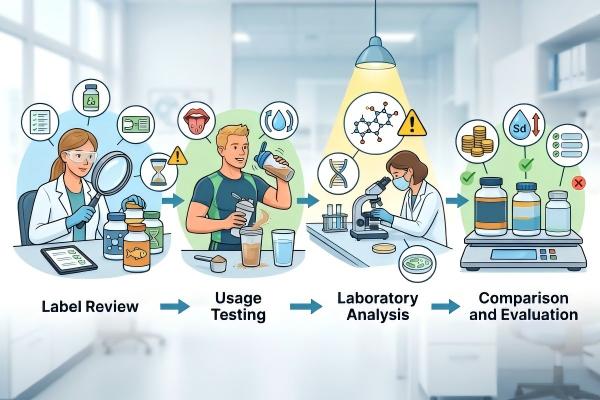
NutrireviewLab evaluates supplements by checking formula details, dosage clarity, serving size, price per serving, taste or mixability when tested, public feedback patterns, disclosures, and real-use fit.
Our process does not treat every product as hands-on tested. Some reviews are based on direct use. Some are label-based. Some include customer feedback analysis from public sources. Some may involve sponsored samples, which must be disclosed. Across all review types, NRL focuses on formula quality, dosage transparency, label clarity, price per serving, use-case fit, evidence level, brand trust, and disclosure. We do not provide medical advice, diagnosis, treatment, cure, or disease-prevention guidance.
Why Testing Process Matters
A clear testing process helps readers understand what was checked, what was tested, and what remains limited.
Supplement reviews can become misleading when readers cannot tell whether a product was actually used, only reviewed from the label, or placed on a list because it is popular. NRL’s testing process is designed to make that distinction clearer. A hydration powder review may include taste and mixability notes if the product was used directly. A magnesium or omega-3 review may rely more heavily on ingredient form, dosage, serving size, and brand transparency. A longevity supplement may require extra caution because claims around NAD+, NMN, NR, CoQ10, and similar categories can easily become exaggerated.
Testing process also matters because supplement buying depends on small details. One electrolyte powder may contain 1,000 mg sodium per serving, while another may contain far less. One protein powder may look cheaper by container price but cost more per serving. A pre-workout may include caffeine that does not fit every user. A probiotic may vary by strain transparency, CFU labeling, storage instructions, or serving count.
Product Selection Criteria
NRL chooses products based on reader demand, category relevance, label availability, marketplace visibility, and comparison value.
NRL does not review every supplement on the market. Products are selected when they are relevant to reader questions, appear in common buying searches, have enough public product information to evaluate, or fill an important comparison gap in a category.
| Selection Factor | What NRL Looks For | Why It Matters |
|---|---|---|
| Reader Demand | Search interest, common questions, category popularity | Helps prioritize useful reviews |
| Category Fit | Electrolytes, creatine, magnesium, protein, omega-3, probiotics, and more | Keeps reviews aligned with NRL’s coverage |
| Label Availability | Supplement facts, serving size, ingredients, warnings | Allows accurate product comparison |
| Buying Visibility | Amazon, brand website, retail platforms, public listings | Helps readers find products they already compare |
| Formula Difference | Unique dosage, ingredient form, sugar profile, caffeine level | Adds meaningful comparison value |
| Price Relevance | Cost per serving, subscription options, container size | Helps readers compare real value |
| Trust Signals | GMP, NSF, Informed Sport, third-party testing, COA access | Adds context beyond popularity |
| User Scenario | Workout, fasting, travel, daily wellness, focus, recovery | Helps match products to real routines |
A product may be included because it is strong, widely searched, newly updated, controversial, frequently compared, or useful for explaining category trade-offs.
Evidence Levels We Use
Every review should explain whether a product was hands-on tested, label-reviewed, sampled, or analyzed through public feedback.
NRL uses evidence labels because not all product evaluations are built the same way. A product that was opened, mixed, tasted, and used in a routine provides different information than a product reviewed only through a supplement facts panel. Both can be useful, but they should not be presented as the same.
| Evidence Level | What It Means | What Readers Should Expect |
|---|---|---|
| Hands-On Tested | NRL used the product directly | Taste, mixability, packaging, texture, serving experience, and routine notes may appear |
| Label-Based Review | NRL reviewed the product label and public product information | No personal testing claims should appear |
| Customer Feedback Analysis | NRL reviewed repeated public feedback patterns | Trends may be summarized, but not treated as controlled testing |
| Expert-Reviewed | Content was checked by a qualified reviewer when available | Credentials and review role should be real and clear |
| Sponsored Sample | A brand provided product for review consideration | Sample relationship should be disclosed |
| Affiliate Review | Product link may earn commission | Score should still follow stated review criteria |

Hands-On Testing Steps
Hands-on testing focuses on real-use factors such as serving experience, taste, mixability, packaging, and routine fit.
When NRL performs hands-on testing, we focus on real product experience rather than dramatic claims. For powders, the process may include opening the container, checking scoop size, noting smell, mixing the product in water, observing clumping or residue, checking sweetness, saltiness, aftertaste, texture, and how easily the serving fits into a routine. For capsules, tablets, softgels, or gummies, we may note serving count, capsule size, packaging clarity, odor, storage instructions, and convenience.
For electrolyte powders and hydration products, hands-on notes may include whether the powder dissolves quickly, whether the taste feels too sweet or too salty, whether residue remains at the bottom of the bottle, and whether the serving feels practical for gym bags, travel, or desk use. For protein powders, mixability, thickness, flavor strength, sweetness, and shaker performance matter. For greens powder, flavor, texture, sediment, smell, and daily-use convenience can affect whether users stay consistent.
Hands-on testing does not prove medical effects. It only helps readers understand sensory, practical, and buying-related factors.
Label Review Process
We check supplement facts, serving size, ingredient amounts, sugar, caffeine, warnings, allergens, and trust signals.
Label review is central to NRL’s testing process because supplement marketing can be less useful than the supplement facts panel. Before a product receives a recommendation, NRL checks the details that affect comparison.
| Label Area | What NRL Checks | Why It Matters |
|---|---|---|
| Serving Size | Scoop, capsule count, tablet count, grams per serving | Determines real intake and cost |
| Servings Per Container | Total usable servings | Needed for price per serving |
| Ingredient Amounts | Active nutrients, minerals, amino acids, caffeine, herbs | Shows dosage transparency |
| Sugar and Carbs | Sugar, added sugar, carbs, calories | Important for keto, fasting, and daily users |
| Sweetener Type | Stevia, monk fruit, sucralose, sugar alcohols, none | Affects preference and tolerance |
| Electrolytes | Sodium, potassium, magnesium, calcium, chloride | Core for hydration comparisons |
| Warnings | Use limits, pregnancy notes, medication cautions, age notes | Helps readers identify caution areas |
| Allergens | Milk, soy, gluten, tree nuts, shellfish, or other allergens | Important for sensitive users |
| Trust Signals | GMP, NSF, Informed Sport, third-party testing, COA access | Adds credibility context |
If label information is missing or unclear, NRL may lower transparency notes or explain the limitation.
Taste and Mixability Checks
NRL records sensory details when products are directly tested, especially powders, hydration mixes, protein, and greens products.
Taste and mixability do not prove a supplement is effective, but they matter for buying decisions. A product can have a strong formula and still be hard to use if it tastes too sweet, too salty, too bitter, too chalky, or leaves residue in a shaker. For categories such as electrolyte powder, hydration powder, protein powder, pre-workout, amino acids, greens powder, fiber powder, and collagen powder, sensory experience can affect whether a reader uses the product once or keeps using it.
When NRL tests a powder directly, we may record water amount, serving size, mixing method, shaker or glass use, dissolving time, clumping, foam, sediment, smell, sweetness, saltiness, aftertaste, and whether flavor strength fits the category. For electrolyte powders, salt level is especially important because some formulas are intentionally sodium-heavy. For protein powders, texture and thickness matter. For greens powders, earthy flavor, sediment, and smell may affect daily use.
If NRL has not directly tasted a product, we should not claim firsthand taste results. Instead, we may summarize repeated public feedback patterns and label them clearly.

Price Per Serving Review
A low container price can be misleading. A product priced at $24.99 with 15 servings costs more per use than a $39.99 product with 30 servings. NRL calculates price per serving where possible because many supplements are used daily or several times per week.
| Value Factor | What NRL Reviews | Why It Matters |
|---|---|---|
| Container Price | Listed price from retailer or official site | Starting point for comparison |
| Servings Per Container | Number of usable servings | Needed for true cost |
| Price Per Serving | Price divided by servings | Helps compare products fairly |
| Subscription Discount | Auto-ship or recurring order pricing | May lower long-term cost |
| Serving Size | Scoop size, capsule count, gram amount | Affects product duration |
| Formula Strength | Ingredient amounts and completeness | Higher price may be justified if formula is stronger |
| Use Frequency | Daily, workout-only, travel-only, occasional | Changes real monthly cost |
| Packaging Waste | Single-stick packs vs tubs or bottles | Affects convenience and cost |
| Availability | Amazon, brand site, local retailers | Affects buying convenience |
NRL does not automatically reward the cheapest product. Value is judged by cost, formula clarity, serving practicality, and fit.

Feedback Pattern Analysis
NRL reviews customer feedback for trends around taste, packaging, value, mixability, tolerance, and repeat purchase behavior.
NRL may review public customer feedback from retailer listings, brand pages, marketplace comments, and other available sources. We look for repeated patterns rather than isolated praise or complaints. For example, if many users mention that an electrolyte powder tastes very salty, that pattern may be useful. If multiple buyers report clumping, packaging leaks, or strong sweetness, those notes may help future shoppers. If only one person reports an unusual experience, NRL should avoid overemphasizing it.
Public feedback is helpful because it shows real-world buying concerns that labels do not show. Taste, mixability, stomach comfort, packaging quality, shipping issues, value perception, and flavor preference can all appear in reviews. However, customer feedback is not the same as lab testing or medical evidence. It may be biased, incomplete, incentivized, or influenced by expectations.
NRL uses feedback patterns as one part of the review process, not the whole score. A product with strong public reviews still needs label transparency, clear dosage, fair price, and fit for the stated use case.
Scoring After Testing
After product testing or label review, NRL applies category-specific scoring. The goal is not to create a mysterious number, but to explain why a product ranks where it does.
| General Supplement Score Area | Weight | Testing Input |
|---|---|---|
| Formula Quality | 25% | Ingredient form, formula logic, category fit |
| Dosage Transparency | 20% | Clear amounts, serving size, proprietary blends |
| Evidence Fit | 15% | Whether ingredients match the stated use case |
| Safety & Label Clarity | 15% | Warnings, allergens, caffeine, sugar, directions |
| Price & Value | 10% | Price per serving, serving count, subscription options |
| Brand Trust | 10% | Testing signals, certifications, COA access, transparency |
| Customer Feedback | 5% | Repeated public patterns and real-world concerns |
For electrolyte powders, NRL uses a more specific model: electrolyte profile 25%, sugar and sweetener profile 15%, ingredient transparency 15%, taste and mixability 15%, use-case fit 15%, price per serving 10%, and customer feedback patterns 5%.
Scores should always be paired with pros, cons, “Best For,” “Not Best For,” and evidence level. A high score means strong fit for a defined use case, not universal suitability.

Testing Limits and Disclosures
We disclose sponsored samples, affiliate links, label-only reviews, and limits around medical claims or personal results.
NRL product testing focuses on buying-related details. Hands-on use may tell us about taste, mixability, packaging, serving convenience, and routine fit. Label review may tell us about ingredient amounts, sugar, caffeine, serving size, allergen notes, and trust signals. Public feedback analysis may show repeated user concerns. None of these methods prove that a supplement will produce a specific health result for a specific person.
NRL does not run clinical trials. We do not diagnose medical conditions. We do not test blood markers, hydration status, sleep architecture, hormone levels, inflammation markers, disease outcomes, or long-term health effects. We do not claim a product treats, cures, prevents, or reverses disease. If a product includes claims that require stronger evidence, NRL should either verify the claim carefully or avoid repeating it.
Commercial relationships must also be visible. Some reviews may include affiliate links. Some products may be sponsored samples. Some placements may be paid. These relationships should be disclosed clearly and should not replace scoring criteria. Readers should use NRL as a research tool, not medical advice.
Frequently Asked Questions
1. Does NRL test every product?
No. Some reviews are hands-on tested, while others are label-based or built from public information.
2. What does hands-on tested mean?
It means NRL used the product directly and may report taste, mixability, packaging, and routine notes.
3. What is label-based review?
It means NRL reviewed supplement facts, product pages, labels, and public product information.
4. Do you run clinical trials?
No. NRL does not run clinical trials or measure medical outcomes.
5. How is taste scored?
Taste is noted only when tested directly or summarized as public feedback patterns.
6. Do sponsored samples affect scores?
They should not. Sponsored samples must be disclosed and still follow review criteria.
7. How is value calculated?
NRL compares price per serving, serving count, formula quality, and routine practicality.
8. Are customer reviews enough?
No. Public feedback is useful, but it does not replace label review or scoring criteria.
9. Can brands submit products?
Yes. Brands may submit products or labels, but review inclusion is not guaranteed.
10. Can testing prove health results?
No. Testing supports buying guidance, not medical claims or guaranteed outcomes.

Submit Products for Review
Send product labels, supplement facts, pricing, certification details, or sample information to the NRL review team.
If you want NutrireviewLab to consider a product for review, send the review team clear product information. Useful details include brand name, product name, category, flavor, supplement facts panel, serving size, servings per container, current price, official website URL, Amazon URL if available, subscription option, certification claims, COA access, third-party testing details, and any relevant label updates.
For electrolyte powders, please include sodium, potassium, magnesium, calcium, chloride, sugar, added sugar, carbs, calories, sweetener type, caffeine, creatine, taurine, BCAA/EAA content, artificial colors, artificial flavors, preservatives, and suggested use case. For capsules, tablets, gummies, and softgels, include ingredient form, dosage, capsule count, warnings, allergens, and storage instructions.
If the product is provided as a sample, sponsored sample, or part of a paid placement, disclose that clearly. NRL does not accept unsupported disease claims, invented testing, fake certifications, or promotional claims as a substitute for verifiable product facts.
Send Us Your Questions Directly
We’re Here to Help You Choose the Right Supplement