
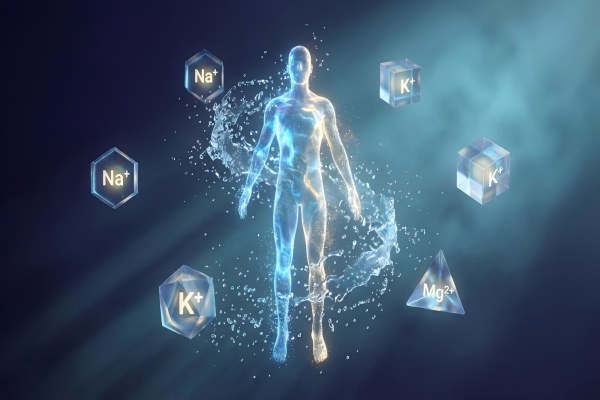
Electrolytes are often presented as something people need only after a long workout, a hot summer run, or an afternoon spent sweating outdoors. In reality, sodium, potassium and magnesium are involved in normal physiology around the clock. They help create the electrical and fluid conditions that allow cells to communicate, muscles to contract, nerves to carry signals, and many biochemical reactions to proceed. The confusing part is that needing these minerals does not automatically mean everyone needs more of them from a powder, tablet, sports drink, or other supplement.
The body needs sodium, potassium and magnesium because these minerals help regulate fluid distribution, maintain electrical gradients across cell membranes, support normal nerve and muscle activity, and participate in essential cellular reactions. Sodium is concentrated mainly outside cells, potassium mainly inside cells, while magnesium supports hundreds of enzyme-dependent processes. Good health depends on appropriate balance rather than simply consuming more electrolytes.
That distinction becomes useful the moment you start reading electrolyte labels. One product may emphasize 1,000 mg of sodium, another may highlight magnesium, and a third may advertise several minerals without providing large amounts of any of them. The label only makes sense when the numbers are connected to physiology, diet, exercise, sweating, and intended use. Understanding what these three minerals actually do provides a much stronger foundation for evaluating food, hydration products, and supplements.
What Are Sodium, Potassium and Magnesium?
Sodium, potassium and magnesium are essential dietary minerals that can function as electrolytes when dissolved in body fluids. Their electrical charge allows them to participate in fluid regulation, cellular signaling, and normal nerve and muscle activity. They are not interchangeable nutrients: sodium is concentrated mainly outside cells, potassium mainly inside cells, while magnesium is distributed largely through bone and soft tissues and supports many enzyme-driven processes.
Are They All Electrolytes?
Yes. An electrolyte is a substance that produces electrically charged particles, called ions, when dissolved in water or another fluid. Sodium commonly exists in body fluids as Na+, potassium as K+, and magnesium as Mg2+. Their electrical charge allows these minerals to participate in processes that ordinary neutral molecules cannot perform in exactly the same way, including the establishment of electrical gradients across cell membranes.
The term “electrolyte” therefore describes how a mineral behaves in solution rather than identifying a completely separate type of nutrient. Sodium, potassium and magnesium are dietary minerals before they ever appear in a hydration powder, and they continue to serve nutritional roles whether they come from food, beverages, or supplements. Other important human electrolytes include chloride, calcium, phosphate and bicarbonate.
This distinction is especially important when comparing commercial products. Two drinks can both use the term “electrolyte formula” while providing dramatically different mineral amounts. One may emphasize sodium, another may provide relatively little sodium but more magnesium, while another includes several electrolyte names primarily to create a broad ingredient profile. The Supplement Facts panel provides more useful information than the word “electrolytes” printed on the front of the package.
Where Are They Found?
Sodium and potassium are often discussed together because they are concentrated on opposite sides of cell membranes. Sodium is a major positively charged ion in extracellular fluid, which includes the fluid surrounding cells and the plasma portion of blood. Potassium, by contrast, is the most abundant positively charged ion inside cells. Maintaining this unequal distribution is fundamental to normal electrical signaling and cellular function.
Magnesium follows a different pattern. According to the NIH Office of Dietary Supplements, an adult body contains approximately 25 grams of magnesium. Roughly 50% to 60% is found in bone, most of the remainder is located in soft tissues, and less than 1% circulates in blood serum. This distribution explains why magnesium should not be pictured simply as another mineral floating freely through the bloodstream.
These differences also show why sodium, potassium and magnesium cannot be evaluated as though they were three interchangeable ingredients. A Supplement Facts panel may list each mineral on adjacent rows, but the body uses them in different locations, different concentrations and different biochemical processes. Their shared electrolyte label reflects part of the story, not the entire nutritional picture.
What Do Intake Numbers Mean?
Dietary reference values give consumers a useful frame of reference, but they should not be interpreted as universal supplementation targets. The National Academies established an Adequate Intake of 1,500 mg of sodium per day for adults, while its Chronic Disease Risk Reduction framework recommends reducing sodium intake when adult consumption exceeds 2,300 mg per day. Potassium has adult AIs of 3,400 mg for men and 2,600 mg for women.
Magnesium uses Recommended Dietary Allowances rather than only Adequate Intake values for most adults. Adult men generally require 400 to 420 mg per day, while most adult women require 310 to 320 mg per day outside pregnancy. FDA Daily Values used on food and supplement labels are somewhat different because they provide standardized reference numbers for comparing products rather than individualized dietary prescriptions.
| Mineral | Adult Dietary Reference | FDA Daily Value | Useful Context |
|---|---|---|---|
| Sodium | 1,500 mg/day AI | 2,300 mg | Adult intake above 2,300 mg/day falls above the National Academies CDRR level |
| Potassium | 3,400 mg/day men; 2,600 mg/day women AI | 4,700 mg | Daily dietary needs are measured in thousands of milligrams |
| Magnesium | 400–420 mg/day men; 310–320 mg/day women RDA | 420 mg | Food and supplements both contribute to total intake |
Equal milligrams therefore do not equal equal nutritional contribution. One hundred milligrams of magnesium represents nearly one-quarter of the 420 mg FDA Daily Value, whereas 100 mg of potassium represents only a little more than 2% of its 4,700 mg Daily Value. Reading both the milligrams and the percentage of Daily Value provides much better context than comparing ingredient names alone.
What Does Each Electrolyte Do?
Sodium, potassium and magnesium share several physiological functions, but each contributes differently. Sodium plays a central role in extracellular fluid regulation and electrical signaling. Potassium is critical to intracellular fluid volume and membrane potential. Magnesium supports more than 300 enzyme systems and participates in energy production, ion transport, protein synthesis, and normal nerve and muscle function.
What Does Sodium Do?
Sodium is frequently discussed as a nutrient people should reduce, which can hide the fact that it is also physiologically essential. Sodium helps regulate extracellular fluid volume and contributes to normal nerve signaling and muscle activity. Its concentration outside cells is one part of the electrical and osmotic environment that allows tissues to operate normally throughout the day.
The nutritional issue is therefore not whether sodium is inherently “good” or “bad.” Amount and context matter. The adult Adequate Intake is 1,500 mg per day, while the National Academies recommends reducing intake when total sodium consumption exceeds 2,300 mg per day under its Chronic Disease Risk Reduction framework. Many adults consuming typical U.S. diets already obtain substantial sodium from foods, particularly packaged, restaurant and prepared foods.
This context changes how a high-sodium electrolyte product should be interpreted. A serving containing several hundred milligrams of sodium may be useful in a setting involving prolonged or substantial sweat losses, but that number does not automatically make a product more appropriate for ordinary desk work or light daily activity. Experienced label evaluation starts with the intended use and total dietary picture rather than awarding points simply for the largest sodium number.
What Does Potassium Do?
Potassium is the major positively charged ion inside cells. It contributes to intracellular fluid volume and helps maintain the electrochemical gradients across cell membranes that are necessary for normal cellular activity. NIH also identifies normal nerve transmission, muscle contraction, kidney function and heart function among the processes in which potassium plays an important physiological role.
The scale of potassium intake is easy to underestimate because electrolyte powders often contain relatively small amounts. Adult AIs are 3,400 mg per day for men and 2,600 mg per day for women, while the FDA Daily Value is 4,700 mg. NIH notes that many traditional potassium-containing dietary supplements provide no more than approximately 99 mg per serving. That amount contributes only about 2.1% of the FDA Daily Value.
This does not mean small amounts are meaningless, but it changes the interpretation. A hydration powder that lists 50 or 100 mg of potassium can legitimately say that potassium is part of its electrolyte profile, yet the serving should not be mistaken for meeting a person’s overall daily potassium intake. Potassium-rich foods usually make a much larger contribution to total dietary intake than low-dose supplementation.
What Does Magnesium Do?
Magnesium has one of the broadest biochemical roles among common electrolyte minerals. The NIH Office of Dietary Supplements describes magnesium as a cofactor in more than 300 enzyme systems. These reactions are involved in protein synthesis, energy production, normal muscle and nerve activity, glucose metabolism, and the synthesis of DNA and RNA, among other essential physiological processes.
Magnesium also participates in the active transport of other ions, including potassium and calcium, across cell membranes. This links magnesium with normal nerve impulse conduction and muscle contraction without making it identical to either sodium or potassium. It is better understood as part of the biochemical infrastructure that supports these systems.
Supplement labels require another useful distinction. The amount declared on Supplement Facts is elemental magnesium, not the total weight of the magnesium-containing compound. A product labeled “Magnesium 100 mg as magnesium citrate,” for example, provides 100 mg of elemental magnesium. Magnesium citrate, chloride, lactate and aspartate are generally more soluble and tend to be more bioavailable than poorly soluble magnesium oxide, although actual product suitability still depends on dose, tolerance, formulation and intended use.
Which Functions Overlap?
Sodium, potassium and magnesium all participate in normal nerve and muscle function, but reaching the same physiological endpoint does not mean the minerals have identical jobs. Sodium and potassium are especially important for maintaining electrical gradients across membranes, while magnesium supports energy-dependent reactions and ion transport that help maintain normal cellular conditions.
This distinction becomes useful when evaluating electrolyte blends. A formula containing 500 mg of sodium, 100 mg of potassium and 20 mg of magnesium is not simply providing “620 mg of electrolytes” in a way that can be directly compared with another formula containing the same total milligrams in different proportions. Mineral identity matters as much as total quantity.
| Electrolyte | Main Physiological Context | Typical Role in a Formula |
|---|---|---|
| Sodium | Extracellular fluid and electrical signaling | Often emphasized in sweat-replacement products |
| Potassium | Intracellular fluid and membrane potential | Supports broader dietary electrolyte profile |
| Magnesium | Enzyme activity, ion transport and neuromuscular function | Can make a meaningful contribution at comparatively smaller milligram amounts |
For consumers, the most useful question is not whether a product contains all three minerals. The better question is how much of each mineral the serving provides and whether those amounts make sense for the routine, diet and activity level for which the product is being considered.

How Do Sodium, Potassium and Magnesium Work Together?
Sodium, potassium and magnesium work together by helping maintain fluid compartments, electrical gradients and ion transport across cell membranes. Sodium is concentrated mainly outside cells and potassium primarily inside them, while magnesium supports energy-dependent transport and hundreds of biochemical reactions. The kidneys continually adjust water and mineral handling, making electrolyte balance an actively regulated biological process rather than a simple matter of consuming equal mineral amounts.
How Do Sodium and Potassium Interact?
The relationship between sodium and potassium is one of the most important electrolyte relationships in human physiology. Their concentrations are intentionally unequal across cell membranes. Sodium is much more prominent in extracellular fluid, while potassium dominates inside cells. Specialized membrane proteins help maintain this separation, creating electrical conditions that allow cells to respond to stimulation.
When nerve and muscle cells become active, controlled ion movement changes the electrical charge across the membrane. Afterward, transport systems restore the normal distribution of ions so the cell can respond again. This process helps explain why sodium and potassium are linked with normal nerve signal transmission and muscle contraction rather than simply with the amount of water a person drinks.
Dietary recommendations reinforce the fact that these nutrients are not supposed to be consumed in identical amounts. Adult potassium AIs reach 2,600 to 3,400 mg per day, depending on sex, while the sodium AI is 1,500 mg. These are population reference values rather than a required sodium-to-potassium ratio for every meal, beverage or supplement serving.
Where Does Magnesium Fit?
Magnesium supports many of the same systems from a different biochemical position. Rather than primarily defining the electrical difference between intracellular and extracellular fluid, magnesium participates in enzyme-driven processes that produce and use cellular energy, support protein and nucleic-acid synthesis, and regulate transport of ions across membranes.
This makes magnesium neither a substitute for sodium nor a substitute for potassium. A large magnesium dose cannot simply compensate for insufficient sodium in a situation involving substantial sodium loss through sweat, because the minerals are performing different physiological functions. Conversely, adding large amounts of sodium does not replace the broader metabolic functions magnesium performs throughout the body.
Magnesium also demonstrates why serum concentration and total nutrient status are different concepts. Less than 1% of total body magnesium is present in serum, and NIH notes that serum values do not necessarily reflect total-body magnesium or tissue concentrations. A blood laboratory value, dietary intake estimate, and Supplement Facts amount therefore answer three different questions and should not be casually treated as interchangeable measures.
How Do the Kidneys Regulate Them?
The kidneys are central to electrolyte homeostasis because they continuously filter blood and adjust how much water and various minerals are retained or excreted. Healthy renal regulation allows the body to accommodate normal day-to-day fluctuations in dietary intake without requiring every meal or beverage to contain precisely the same mineral composition.
Magnesium provides a useful example. NIH reports that approximately 120 mg of magnesium may be excreted in urine each day under normal circumstances, while the kidneys reduce urinary losses when magnesium status becomes lower. Potassium handling is also tightly connected with renal function, and healthy kidneys generally excrete excess dietary potassium to help maintain normal blood concentrations.
This regulatory capacity is also why supplement safety changes when kidney function or certain medications are involved. Potassium can accumulate in people whose kidneys cannot excrete it normally, while some medications alter potassium handling. Magnesium clearance can also be impaired in renal dysfunction. For people with relevant health conditions or medication use, individualized advice should come from a qualified healthcare professional rather than from a generic electrolyte label.
Is Balance More Important Than Amount?
For most consumers, balance is a more useful concept than pursuing the largest possible mineral numbers. A higher-sodium formulation may be appropriate for prolonged heavy sweating, while a lower-sodium option may fit someone simply looking for a flavored daily hydration beverage. A meaningful magnesium serving may contribute substantially to daily magnesium intake without serving the same role as sweat sodium replacement.
This is also why phrases such as “complete electrolytes” should be interpreted cautiously. The presence of sodium, potassium and magnesium tells you which minerals are included, but not whether the doses are meaningful for a particular use. Serving size, mineral amounts, sugar, carbohydrate, caffeine, other electrolytes and intended context all influence how the finished formula should be interpreted.
The body maintains narrow physiological ranges through coordinated intestinal absorption, intracellular distribution, hormonal signaling and renal excretion. A thoughtful supplement comparison therefore examines the identity and amount of each mineral rather than rewarding whichever label produces the largest combined milligram number.
How Do Electrolytes Support Hydration, Nerves and Muscles?
Electrolytes support hydration by helping regulate water distribution across body compartments, while their electrical charges allow nerve and muscle cells to function normally. Sodium and potassium are particularly important for electrical gradients, and magnesium contributes to ion transport and cellular energy processes. During sweating, both water and electrolytes are lost, but the amount varies widely with heat, activity duration, intensity and individual sweat characteristics.
How Do They Affect Fluid Balance?
The human body does not store water in one uniform reservoir. Water is distributed between intracellular fluid inside cells and extracellular fluid outside cells. Differences in electrolyte concentrations help influence how water is distributed between these compartments, making sodium and potassium particularly important to normal fluid regulation.
Sodium is closely associated with extracellular fluid, while potassium helps regulate intracellular fluid volume. This relationship explains why hydration is more complex than simply consuming the largest possible amount of plain water. Fluid intake, fluid losses, electrolyte intake, food, kidney function and physical activity all contribute to the body’s water balance over the course of a day.
The issue becomes more noticeable during prolonged sweating because sweat removes water and electrolytes simultaneously. During extended activity, replacing only water while ignoring substantial sodium losses may not always match what the body has lost. At the same time, ordinary daily activity generally does not require aggressive electrolyte replacement. Context matters more than the assumption that every glass of water needs added minerals.
How Do They Support Nerve Signals?
Nerve cells communicate by rapidly changing the electrical state across their membranes. Sodium and potassium are central to these changes because their unequal concentrations inside and outside cells create the electrical gradient necessary for nerve impulses. Controlled channels allow ions to move across the membrane when a signal is generated, and transport proteins later help restore the original distribution.
A useful mental model is a rechargeable battery rather than a glass of mineral water. The important feature is not merely the presence of charged minerals but the separation of those charges across a membrane. Without the correct ion distribution, electrically active tissues cannot behave normally.
Magnesium supports this environment from another direction by participating in ion transport and enzyme-dependent processes. This is why sodium, potassium and magnesium can all be associated with normal nervous-system function without suggesting that each mineral performs the same electrical task. The shared result comes from coordinated roles rather than interchangeable chemistry.
How Do They Support Muscles?
Muscle activity depends on electrical stimulation, ion movement and energy-dependent processes. Sodium and potassium participate in the electrical activation of muscle cells, while magnesium contributes to energy metabolism, ion transport and normal muscle function. These roles are fundamental to physiology whether a person is lifting weights, walking across a room, or simply maintaining normal posture.
The existence of these physiological roles does not mean taking more electrolytes automatically improves strength, recovery or athletic performance. A nutrient being necessary for normal muscle function and a supplement producing a measurable performance advantage are separate propositions. Supplement benefits depend on baseline intake, losses, exercise conditions, dose and the formulation being used.
This distinction is particularly important in marketing. It is reasonable to explain that magnesium supports normal muscle function, but that statement should not be stretched into a promise that a magnesium-containing powder will eliminate every exercise-related muscle complaint. Responsible product evaluation separates established nutrient roles from stronger finished-product claims requiring additional evidence.
How Much Can Sweating Matter?
Sweat losses differ substantially between individuals. Environmental temperature, humidity, exercise intensity, body size, clothing, acclimatization and genetics can all influence both sweat rate and sweat composition. The American College of Sports Medicine has noted that heavy sweaters may lose approximately 500 to 700 mg of sodium during an hour of vigorous exercise, but this is an illustrative range rather than a universal replacement prescription.
Commercial hydration products also vary considerably. Different formats can contain modest or large sodium doses, and the word “electrolyte” does not reveal how much replacement a serving actually provides. Someone losing substantial sodium during extended exercise may evaluate a formula very differently from someone drinking an electrolyte beverage during a 30-minute recreational workout.
| Situation or Example | Sodium Amount | Practical Context |
|---|---|---|
| Heavy vigorous sweating | ~500–700 mg lost/hour | Illustrative ACSM range; individual losses vary |
| Electrolyte water example | ~120 mg per 8 oz | Modest sodium contribution |
| Sports drink example | ~110 mg per 8 oz | Depends heavily on drinking volume |
| Electrolyte tablet example | ~150 mg per tablet | Format alone does not indicate high mineral content |
| Short everyday activity | Highly variable need | Food and ordinary fluids may already be adequate |
An experienced supplement comparison therefore looks beyond packet, tablet or beverage format. The milligrams per serving, number of servings consumed, duration of activity and likely sweat exposure provide far more useful information than packaging style.
What Happens When Electrolytes Are Out of Balance?
An electrolyte imbalance occurs when one or more electrolyte concentrations become too low or too high. It does not simply mean someone needs an electrolyte drink. Heavy sweating, gastrointestinal fluid loss, excessive water intake, certain medications and kidney, heart or liver problems can all affect electrolyte concentrations. Significant or persistent symptoms require proper clinical assessment rather than self-diagnosis from a product advertisement.
What Does Imbalance Mean?
The phrase “electrolyte imbalance” is often used casually to describe thirst, tiredness or a difficult workout, but clinically it has a more specific meaning. It refers to one or more electrolyte concentrations becoming abnormally low or high. Sodium, potassium and magnesium each have recognized low and high states, and both sides of the range can matter.
Low sodium is known as hyponatremia and high sodium as hypernatremia. Potassium can become too low, called hypokalemia, or too high, called hyperkalemia. Magnesium can likewise fall into hypomagnesemia or rise into hypermagnesemia. These terms describe clinical conditions rather than ordinary day-to-day fluctuations in how someone feels.
This two-sided definition matters because it challenges the common assumption that electrolyte problems are always solved by adding more minerals. If too little potassium can be a problem, it does not follow that increasingly large potassium doses are increasingly desirable. Normal physiology depends on keeping concentrations within appropriate ranges, which is a different objective from maximizing intake.
What Can Change Electrolyte Levels?
Electrolyte concentrations can change when intake, fluid losses and the body’s regulatory systems fall out of alignment. Severe vomiting or diarrhea can remove both fluid and minerals. Heavy sweating during prolonged exercise or hot conditions can also increase losses, particularly of sodium. In a different direction, consuming extremely large amounts of plain water during prolonged activity can dilute blood sodium concentrations.
Medication use and kidney function create a different set of considerations. ACE inhibitors, angiotensin receptor blockers and potassium-sparing diuretics can reduce potassium excretion and increase potassium concentrations in susceptible people. Other types of diuretics may increase potassium losses. Magnesium handling can also be affected by medications and reduced kidney function.
These situations demonstrate why an electrolyte product cannot be treated as a universal response to every suspected imbalance. Replacing sweat after prolonged physical activity is fundamentally different from correcting an abnormal blood electrolyte concentration caused by renal dysfunction or medication effects. The first may involve routine nutrition decisions, while the second requires qualified medical assessment and management.
Is More Electrolyte Always Better?
More is not automatically better. Sodium illustrates the trade-off particularly well. Sodium is essential for normal physiology, yet the National Academies recommends reducing adult dietary intake when it exceeds 2,300 mg per day under its Chronic Disease Risk Reduction framework. A beverage supplying several hundred milligrams can make sense in a high-sweat context while being unnecessary in another routine.
Potassium demonstrates a different kind of boundary. No population-wide potassium UL has been established for apparently healthy people, but this does not mean unlimited supplemental potassium is appropriate. People with reduced kidney function or medications that impair potassium excretion can be vulnerable to excessive potassium accumulation.
Magnesium has a clearer supplemental threshold. Adult magnesium requirements generally range from 310 to 420 mg per day depending on age and sex, while the adult Tolerable Upper Intake Level for magnesium from supplements and medications is 350 mg per day. That 350 mg UL does not apply to magnesium naturally present in food. The distinction is important when evaluating high-dose magnesium products alongside ordinary dietary intake.
Why Symptoms Are Not Enough
Fatigue, headache, muscle discomfort, weakness, gastrointestinal symptoms and changes in workout performance can occur for many unrelated reasons. None of these symptoms alone can establish that sodium, potassium or magnesium is low, and a checklist posted online cannot substitute for appropriate medical evaluation when symptoms are persistent, severe or unusual.
Magnesium offers a useful example of the difficulty involved. Less than 1% of total body magnesium is found in blood serum, and serum values do not always reflect total-body stores or tissue concentrations. At the same time, symptomatic magnesium deficiency caused solely by low intake is relatively uncommon in otherwise healthy people because the kidneys can reduce urinary magnesium losses when status falls.
A responsible approach separates three questions: whether the nutrient is essential, whether someone’s usual dietary intake is likely to be adequate, and whether that person has a clinically meaningful electrolyte abnormality. These questions may overlap, but they are not interchangeable, and an over-the-counter supplement label cannot answer all three.
Do You Need More Electrolytes From Food or Supplements?
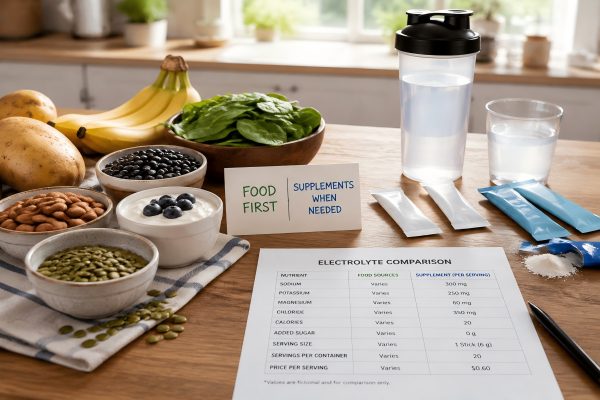
Most healthy adults obtain sodium, potassium and magnesium from ordinary foods and beverages, so needing these minerals physiologically does not automatically mean a daily electrolyte supplement is necessary. Supplements become more relevant when substantial sweating, prolonged exercise, environmental heat, convenience or a documented nutritional need creates a clear reason for them. Food, total intake and the actual Supplement Facts panel should remain the starting points.
Which Foods Provide Them?
Potassium is found across a broad range of foods rather than in a single “potassium food.” Potatoes, beans, lentils, leafy greens, tomatoes, dairy foods, fish, poultry and several fruits all contribute meaningful amounts. Because adult potassium recommendations are measured in thousands of milligrams per day, food usually plays a much larger role in meeting total potassium intake than conventional low-dose supplements.
Magnesium is particularly abundant in seeds, nuts, legumes, whole grains and leafy green vegetables. NIH reports that one ounce of roasted pumpkin seeds provides approximately 156 mg of magnesium, one ounce of chia seeds about 111 mg, an ounce of dry-roasted almonds around 80 mg, and half a cup of boiled spinach approximately 78 mg. Half a cup of cooked black beans contributes about 60 mg.
Sodium is different because insufficient access is rarely the major issue in typical U.S. diets. Salt, breads, prepared foods, restaurant meals, sauces, processed meats and packaged products can all contribute substantial amounts. This is one reason supplementation decisions differ among the three minerals: a person may easily consume substantial sodium while still needing to pay more attention to potassium- and magnesium-rich foods.
Do Most People Need a Daily Supplement?
There is no evidence-based rule stating that every healthy adult should drink an electrolyte powder every day. Many people can maintain normal hydration and electrolyte intake through ordinary food and fluids during routine daily activity. Supplemental products offer convenience and controlled servings, but convenience should not automatically be interpreted as physiological necessity.
The context changes during prolonged activity, heavy sweating or sustained heat exposure. Someone completing a long training session outdoors may have a very different replacement need from someone completing a short indoor workout. Duration, sweat rate, food intake and environmental conditions all influence the decision.
Potassium illustrates how supplement marketing can create misleading expectations. Adult AIs are 2,600 to 3,400 mg per day, while many traditional supplements contain no more than around 99 mg per serving. A low-dose potassium serving can still contribute to a formula, but it does not replace a potassium-rich diet. Magnesium supplements can provide a larger fraction of the daily requirement, making dose and total supplemental intake especially important when multiple products are used together.
How Should You Read the Label?
Start with the serving size. Every mineral number on a Supplement Facts panel applies to the stated serving, which may be one packet, one scoop, several tablets or another defined quantity. Comparing two formulas before checking serving size can create an inaccurate impression of their relative strength.
The next step is to read milligrams and percentage of Daily Value together. FDA uses Daily Values of 2,300 mg for sodium, 4,700 mg for potassium and 420 mg for magnesium. As a general labeling guide, FDA considers 5% DV or less per serving low and 20% DV or more high. These values are comparison tools, not individualized exercise prescriptions.
| Label Field | FDA Daily Value | 5% DV | 20% DV | What It Tells You |
|---|---|---|---|---|
| Sodium | 2,300 mg | 115 mg | 460 mg | Indicates relative sodium density |
| Potassium | 4,700 mg | 235 mg | 940 mg | Shows whether potassium contribution is small or substantial |
| Magnesium | 420 mg | 21 mg | 84 mg | Relatively modest milligrams can represent meaningful %DV |
| Added Sugar | 50 g | 2.5 g | 10 g | Helps compare low-sugar and carbohydrate-containing formulas |
A complete comparison should continue beyond these minerals. Check total carbohydrate, added sugar, calories, caffeine, chloride, calcium, sweetener type, serving count and directions. A formula designed for long endurance activity may intentionally look very different from a low-calorie hydration product intended for ordinary daily use.
When Does a Supplement Make Sense?
An electrolyte supplement makes the most practical sense when it addresses a defined need rather than an abstract belief that everyone requires additional minerals. Prolonged exercise, substantial sweating, hot conditions and situations where carrying normal food is inconvenient can make a measured electrolyte serving useful. A supplement may also have a role when a qualified professional recommends addressing a specific nutritional gap.
Consumers can simplify product comparison by asking a few concrete questions. How much sodium is provided per actual serving? How much potassium and magnesium are present? Does the formula also contain sugar, carbohydrate or caffeine? How many servings are likely to be consumed during the intended activity? Does that intake complement the rest of the day’s food rather than simply adding nutrients without context?
For NutriReviewLab, these label-level distinctions are more useful than judging products by front-panel phrases such as “advanced hydration” or “complete electrolyte complex.” The same approach is valuable to brands that want products evaluated accurately: current Supplement Facts, serving details, ingredient documentation and clearly identified market versions make independent comparison more reliable. Providing product information or discussing a commercial relationship should never guarantee editorial coverage, favorable scoring or ranking.
People managing kidney disease, taking medications that affect potassium or fluid balance, or dealing with other health conditions should discuss electrolyte supplements with a qualified healthcare professional. The biological importance of a mineral does not remove the need for caution when normal excretion or regulation may be altered.
Conclusion
Sodium, potassium and magnesium are essential because normal physiology depends on carefully controlled fluid distribution, electrical signaling, muscle activity and enzyme-driven cellular reactions. Sodium is concentrated primarily outside cells, potassium is concentrated primarily inside them, and magnesium supports hundreds of biochemical reactions while also contributing to ion transport and neuromuscular function. Their roles overlap, but the minerals are not interchangeable, and larger numbers on a supplement label do not automatically indicate a more useful formula.
For most healthy adults, ordinary food and beverages remain the foundation of electrolyte intake. Supplemental electrolyte products become more relevant when prolonged activity, heat, meaningful sweat loss or convenience creates a specific reason to use them. A thoughtful comparison begins with serving size, milligrams, %DV, sugar, caffeine and the intended use of the product. The strongest decision is rarely the formula with the largest total electrolyte number; it is the one whose composition makes sense for the situation in which it will actually be used.
Frequently Asked Questions
What are the three most important electrolytes in the body?
Sodium, potassium and magnesium are among the body’s major electrolytes, but they are not the only ones. Chloride, calcium, phosphate and bicarbonate also contribute to normal physiological functions. Sodium and potassium are particularly important for electrical gradients and fluid distribution, while magnesium supports extensive enzyme activity and ion transport. The relative importance of each depends on the physiological process being discussed rather than on a simple ranking of minerals.
Is sodium or potassium more important for hydration?
Both are important, but they contribute differently. Sodium plays a particularly prominent role in extracellular fluid and is usually the electrolyte lost in the greatest quantity through sweat. Potassium is concentrated mainly inside cells and contributes to intracellular fluid regulation and membrane potential. During substantial sweating, sodium often receives more attention in replacement formulas, while normal potassium intake usually depends heavily on food throughout the day.
How much sodium, potassium and magnesium do adults need each day?
Adult dietary reference values provide useful general context. Sodium has an Adequate Intake of 1,500 mg per day, while adults are advised to reduce intake when it exceeds 2,300 mg under the National Academies CDRR framework. Potassium AIs are approximately 3,400 mg for adult men and 2,600 mg for adult women. Magnesium RDAs generally range from 400–420 mg for men and 310–320 mg for women outside pregnancy.
Can you get enough electrolytes from food?
Many healthy adults can obtain sufficient sodium, potassium and magnesium through ordinary foods and beverages. Sodium is common in prepared and packaged foods, while potassium is available from potatoes, beans, vegetables, dairy products, fruits, fish and meat. Magnesium-rich foods include pumpkin seeds, chia seeds, almonds, beans, whole grains and leafy vegetables. Supplements can provide convenience but are not automatically required simply because these minerals are essential.
Do you need electrolytes every day?
The body uses electrolytes every day, but that does not mean every person needs an electrolyte supplement every day. Routine food and beverages often provide sufficient minerals for ordinary activity. Supplemental products become more relevant when prolonged exercise, substantial sweating, hot conditions or another defined use case increases fluid and electrolyte losses. The amount that makes sense depends on the activity, diet, climate and individual circumstances.
Is a high-sodium electrolyte powder better?
Not necessarily. Higher sodium can be useful when substantial sodium is being lost through prolonged or heavy sweating, but it is not automatically desirable for every routine. The National Academies recommends reducing adult sodium intake when total consumption exceeds 2,300 mg per day under its Chronic Disease Risk Reduction framework. Product selection should therefore consider total diet, exercise duration, sweat exposure and the sodium supplied by each serving.
What should you look for in an electrolyte supplement?
Start with serving size and the actual milligrams of sodium, potassium and magnesium rather than front-label claims. Then check percentage Daily Value, sugar, added sugar, carbohydrate, calories, caffeine, other electrolytes, sweetener type and serving count. The intended use matters just as much as the ingredient list: a formula designed for long endurance exercise may appropriately look very different from one intended for casual daily hydration.