

Electrolytes are often discussed as something people add to a water bottle after a workout, yet their real role begins long before sports drinks enter the picture. Every minute of the day, charged particles are helping cells control water, nerves transmit electrical signals, muscles contract, and the body maintain the narrow chemical conditions required for normal function. Understanding electrolytes is therefore less about memorizing ingredients on a hydration packet and more about understanding how the body’s fluid compartments communicate.
The seven major electrolytes commonly discussed in human physiology are sodium, potassium, chloride, calcium, magnesium, phosphate, and bicarbonate. They help regulate fluid distribution, nerve signaling, muscle activity, cellular processes, bone structure, and acid-base balance. Some laboratory panels or hydration guides list fewer electrolytes because they focus on particular measurements or use cases rather than the complete physiological group.
That difference becomes useful the next time you pick up an electrolyte powder and see three minerals on one label and six on another. The longer list is not automatically the stronger formula, and a larger milligram number is not automatically a better choice. Once you understand where each electrolyte works and what the numbers actually mean, supplement labels become much easier to read—and much harder for vague front-of-package language to oversimplify.
What Are Electrolytes?
Electrolytes are substances that form positively or negatively charged ions when dissolved in water or body fluids. In the body, these charged particles are present in blood, urine, tissues, and fluids inside and outside cells. Their electrical properties allow them to participate in fluid regulation, nerve transmission, muscle activity, chemical reactions, and acid-base balance.
What Makes a Mineral an Electrolyte?
An electrolyte is defined by what happens when a substance enters a solution. Sodium chloride, for example, separates into positively charged sodium ions and negatively charged chloride ions when dissolved in water. Potassium, calcium, and magnesium also form positively charged ions, while bicarbonate and phosphate contribute negatively charged forms. Those electrical charges allow ions to interact with cell membranes and participate in processes that depend on controlled electrical and chemical gradients.
The distinction becomes important when reading mineral supplements. Iron, zinc, selenium, copper, and iodine are essential nutrients, but they are not normally grouped with sodium, potassium, chloride, calcium, magnesium, phosphate, and bicarbonate when discussing the body’s principal electrolyte system. A powder containing a long list of trace minerals can therefore be nutritionally interesting without necessarily providing a more substantial electrolyte profile for hydration.
Electrolytes also should not be treated as one nutrient with one universal target. Sodium, potassium, magnesium, calcium, chloride, and phosphorus have separate Daily Values on U.S. food and supplement labels. Their physiological locations and regulatory pathways differ as well. A meaningful label comparison needs to identify the individual nutrient, its amount per serving, the serving size, and the setting in which the formula is intended to be used rather than relying on an undefined “total electrolytes” number.
Where Are Electrolytes Found?
Electrolytes are found throughout the body’s fluid compartments rather than stored together in one reservoir. Blood plasma, fluid surrounding cells, fluid inside cells, urine, and other body fluids all contain charged ions, but the concentrations differ substantially by location. Sodium is especially important outside cells, whereas potassium is the most abundant intracellular cation. Maintaining that separation is fundamental to normal cell function.
Cells actively maintain these differences using membrane transport systems, including the sodium-potassium pump. The result is not simply a chemical curiosity: concentration differences across cell membranes help create the electrical conditions required for nerves and muscles to function. If sodium and potassium were distributed evenly without regulation, many of those normal electrical processes could not operate in the same way.
Calcium shows how easily total-body content can be confused with blood concentration. Almost all body calcium is stored in bones and teeth, even though the much smaller fraction outside the skeleton performs important signaling and physiological functions. Magnesium is also distributed largely in bone and intracellular tissues. A blood measurement, dietary intake figure, and total-body amount therefore describe different things and should not be casually substituted for one another.
Are All Minerals Electrolytes?
Not every essential dietary mineral is usually classified as a major physiological electrolyte. Sodium, potassium, chloride, calcium, magnesium, and phosphorus clearly belong in mineral nutrition, while bicarbonate is an important charged component of body fluids even though consumers do not usually think of it as a dietary mineral in the same way. Iron, zinc, copper, selenium, and iodine remain essential but are typically discussed through different nutritional functions.
This difference matters in the supplement industry because front labels sometimes blur “electrolyte complex,” “trace mineral blend,” and “mineral support” into similar-looking messages. Consumers benefit from checking the Supplement Facts panel instead of assuming those terms describe equivalent formulas. A hydration product containing sodium, chloride, and potassium at clearly disclosed amounts may provide a more use-specific electrolyte profile than a broad mineral blend containing tiny quantities of numerous trace elements.
NutriReviewLab applies the same principle when comparing hydration formulas. The site’s documented review framework emphasizes individual electrolyte amounts, sugar and sweetener profile, label transparency, use-case fit, and other verifiable fields rather than treating a longer ingredient list as an automatic advantage. That approach keeps product comparisons tied to information consumers can actually verify on a current label.
Which Electrolytes Are Most Important?
The seven major electrolytes commonly emphasized in human physiology are sodium, potassium, chloride, calcium, magnesium, phosphate, and bicarbonate. Calling one universally “most important” is misleading because their roles differ. Sodium and potassium dominate major fluid and electrical gradients, while the remaining electrolytes contribute to muscle activity, bones, enzyme systems, cell chemistry, electrical neutrality, and acid-base regulation.
Which Are the Seven Main Electrolytes?
Different websites sometimes present different numbers of “main electrolytes,” largely because the word is being used in different contexts. MedlinePlus discusses bicarbonate, calcium, chloride, magnesium, phosphate, potassium, and sodium as principal electrolytes in the body. A hydration article may emphasize sodium, potassium, magnesium, and calcium, while an electrolyte blood panel commonly focuses on sodium, potassium, chloride, and bicarbonate. Those shorter lists answer narrower questions rather than overturning the broader physiological framework.
| Electrolyte | Common ionic form | Main physiological emphasis | Common consumer context |
|---|---|---|---|
| Sodium | Na⁺ | Extracellular fluid, nerve and muscle activity | Salt, sweat replacement, hydration formulas |
| Potassium | K⁺ | Intracellular fluid, membrane electrical activity | Foods, electrolyte products |
| Chloride | Cl⁻ | Fluid balance, electrical neutrality | Salt, sweat replacement |
| Calcium | Ca²⁺ | Bone structure, muscle contraction, signaling | Foods, fortified products, supplements |
| Magnesium | Mg²⁺ | Enzyme activity, nerve and muscle function | Foods, mineral supplements, hydration powders |
| Phosphate | PO₄ forms | ATP, cell membranes, bone, buffering | Diet, metabolism, laboratory testing |
| Bicarbonate | HCO₃⁻ | Acid-base balance, carbon dioxide transport | Blood chemistry and buffering |
The practical point is that “seven electrolytes” is a useful physiological framework, not a product-formulation requirement. A beverage does not become incomplete merely because it lacks phosphate or bicarbonate, and a product containing all seven is not automatically superior. Formula quality depends on the actual amounts, intended use, serving instructions, sugar or carbohydrate profile, and whether the label makes those details clear enough for meaningful comparison.
Which Electrolytes Are Inside and Outside Cells?
Sodium and potassium provide the clearest example of how electrolyte location matters. Potassium is the most abundant intracellular cation, meaning it is concentrated primarily inside cells. Sodium has the complementary role of being a major regulator of extracellular fluid volume, including plasma volume. Their unequal distribution creates an electrochemical gradient across cell membranes that contributes to nerve activity, muscle function, and normal cellular transport.
Chloride is also concentrated primarily in extracellular fluid and frequently accompanies sodium. Magnesium is predominantly associated with intracellular tissues and bone. Calcium is even more unevenly distributed: almost all calcium in the body resides in bones and teeth, while a small fraction circulates or participates in cellular signaling. These facts show why simply totaling electrolyte milligrams tells very little about how those minerals operate once consumed.
Supplement labels describe intake, not distribution inside the body. A serving containing 300 mg potassium means the product provides 300 mg potassium before digestion and metabolism. It does not mean 300 mg will remain circulating in blood. Absorption, cellular uptake, kidney handling, dietary intake, fluid status, and numerous regulatory mechanisms determine what happens afterward. That separation between “amount swallowed” and “concentration in the body” is one of the most important principles in responsible electrolyte education.
Which Electrolytes Are Commonly Tested in Blood?
A common clinical electrolyte panel usually measures sodium, potassium, chloride, and bicarbonate. A comprehensive metabolic panel also includes these electrolytes along with other measurements such as glucose, calcium, proteins, and markers related to kidney and liver function. Magnesium and phosphorus can be tested separately when a clinician considers them relevant.
| Clinical context | Electrolytes commonly included | What the test is designed to show |
|---|---|---|
| Electrolyte panel | Sodium, potassium, chloride, bicarbonate | Concentrations of major circulating electrolytes |
| Comprehensive metabolic panel | Sodium, potassium, chloride, bicarbonate plus calcium and other non-electrolyte measures | Broader metabolic and organ-related information |
| Magnesium test | Magnesium | Circulating magnesium concentration |
| Phosphorus/phosphate test | Phosphorus/phosphate | Circulating phosphorus status |
| Calcium testing | Total or sometimes ionized calcium | Circulating calcium rather than total skeletal stores |
This explains a common online misunderstanding. A laboratory page listing four electrolytes is not claiming that calcium or magnesium is unimportant, just as an electrolyte beverage containing three minerals is not defining the entirety of human physiology. Clinical testing, nutrition science, and hydration formulation use overlapping terminology for different purposes. Readers should first identify which context a source is addressing before deciding that two lists conflict.
Laboratory results also should not be interpreted from a supplement-shopping perspective. A Supplement Facts panel answers “How much does one serving provide?” A clinical blood test answers a very different question about circulating concentration at a particular moment. Abnormal test results require professional interpretation because medications, kidney function, hydration status, and other medical factors can materially change their meaning.

What Does Each Electrolyte Do?
Electrolytes do not perform one generic hydration function. Sodium, potassium, and chloride strongly influence fluid and electrical balance; calcium and magnesium participate in muscle, nerve, enzyme, and signaling processes; phosphate is fundamental to ATP, membranes, and bone; and bicarbonate helps maintain acid-base balance. Understanding these separate roles is more useful than treating every mineral in an electrolyte drink as interchangeable.
What Do Sodium and Chloride Do?
Sodium is a major extracellular cation and plays an important role in extracellular fluid volume as well as normal nerve and muscle activity. Chloride is a major extracellular anion that often accompanies sodium and contributes to fluid balance and electrical neutrality. Together, they are particularly relevant to exercise hydration because sodium and chloride are major electrolytes lost through sweat.
Sweat losses are not fixed. Research examining athletes consistently reports substantial variation in sweat rate and sweat sodium concentration between individuals. A person’s exercise intensity, environment, acclimatization, and physiology can change the amount of sodium lost. One study examining exercise intensity found that total sweat sodium and chloride losses rose by about 150% when exercise intensity increased within the study protocol, reinforcing the point that replacement needs depend heavily on context.
At the same time, sodium deserves nutritional context. The FDA Daily Value is less than 2,300 mg per day, and the FDA reports that average U.S. sodium intake is approximately 3,400 mg per day. A hydration product containing 1,000 mg sodium therefore represents a very different formulation from one containing 200 mg. Neither figure identifies the “better” product without considering sweat losses, diet, activity duration, intended use, and individual health considerations.
What Do Potassium and Magnesium Do?
Potassium is the body’s most abundant intracellular cation. It helps maintain intracellular fluid volume and transmembrane electrical gradients and is required for normal cellular, nerve, and muscle function. The FDA Daily Value used for food and supplement labeling is 4,700 mg, which helps put the smaller potassium quantities found in many electrolyte powders into perspective.
Magnesium works through a different set of pathways. Rather than functioning mainly as the dominant ion of one fluid compartment, magnesium serves as a cofactor in hundreds of enzyme reactions and contributes to normal muscle and nerve function, protein synthesis, and energy-related metabolism. Its FDA Daily Value is 420 mg. A hydration powder containing 50 mg magnesium therefore supplies roughly 12% of that labeling Daily Value, while 200 mg potassium represents only about 4% of the potassium Daily Value.
Those percentages are useful for label comparison but should not be mistaken for individualized requirements. Electrolyte beverages are rarely designed to supply an entire day’s potassium, and high magnesium quantities can materially change taste, formulation, and tolerability. Consumers are better served by considering how a serving fits alongside food intake and the intended use instead of assuming that every electrolyte should approach 100% Daily Value.
What Do Calcium and Phosphate Do?
Calcium is widely associated with bones because almost all of the body’s calcium is stored in bones and teeth. The remaining fraction still matters: calcium participates in muscle contraction, nerve signaling, vascular function, and other cellular processes. The FDA Daily Value for calcium is 1,300 mg, although individual recommended intake varies with age and life stage.
Phosphorus is present mainly in the body as phosphate and contributes to bones and teeth, DNA and RNA, phospholipid cell membranes, and ATP-related energy transfer. Its presence throughout cells makes phosphate physiologically important even though it receives far less attention on hydration packaging than sodium, potassium, or magnesium. The U.S. Daily Value used on labels is 1,250 mg.
| Nutrient | FDA Daily Value | Amount equal to 10% DV | Useful label context |
|---|---|---|---|
| Sodium | <2,300 mg | 230 mg | Sweat-focused formulas can differ substantially in sodium |
| Potassium | 4,700 mg | 470 mg | Most hydration products provide only part of daily intake |
| Chloride | 2,300 mg | 230 mg | Often supplied with sodium in mineral salts |
| Calcium | 1,300 mg | 130 mg | Much daily intake commonly comes from foods |
| Magnesium | 420 mg | 42 mg | Relatively small milligram amounts can show a visible %DV |
| Phosphorus | 1,250 mg | 125 mg | Less commonly emphasized in hydration powders |
Daily Values are standardized labeling reference amounts rather than personal prescriptions. A 10% Daily Value serving can be nutritionally meaningful without representing the amount someone “needs during exercise.” That distinction helps prevent %DV from being used as a performance score and keeps the Supplement Facts panel in its proper role: a transparent way to compare what each serving contains.
What Does Bicarbonate Do?
Bicarbonate is easy to overlook because consumers rarely shop for it alongside potassium or magnesium, but it is a major component of the body’s acid-base buffering system. MedlinePlus identifies bicarbonate as one of the main electrolytes and notes that it contributes to maintaining acid-base balance and moving carbon dioxide through the bloodstream. It is also one of the four electrolytes commonly measured in a standard electrolyte panel.
Bicarbonate illustrates an important difference between human physiology and commercial hydration formulation. A substance can be physiologically essential without being a headline ingredient in an everyday electrolyte powder. Product developers must also consider taste, mineral forms, serving concentration, compatibility, stability, cost, and the actual use case a formula is intended to address.
For readers comparing products, the absence of bicarbonate from a hydration label does not mean the product is missing a required piece of human physiology. Similarly, a product that lists more physiological electrolytes is not automatically more useful. The question remains whether the disclosed amounts and overall formulation are sensible for the setting in which the product is likely to be consumed.
How Do Electrolytes Work Together?
Electrolytes operate as an interconnected system rather than as independent nutrients. Differences in sodium and potassium concentrations help establish electrical gradients across cell membranes, chloride balances positive charges, calcium and magnesium participate in signaling and muscle processes, and bicarbonate and phosphate contribute to acid-base control. The kidneys continuously adjust water and electrolyte handling to help maintain these concentrations within regulated ranges.
How Do Electrolytes Control Fluid Balance?
Water distribution depends partly on the concentration of dissolved substances in different fluid compartments. Sodium is especially important in extracellular fluid, while potassium is concentrated inside cells. These concentration differences influence osmolality and help determine how water moves between body compartments. The body continually regulates both water and electrolytes instead of allowing whatever someone drinks to distribute passively and uniformly.
That is one reason “drink more water” and “take more electrolytes” are both oversimplifications when presented without context. Hydration reflects fluid intake, food, sodium and other mineral intake, sweat loss, urine output, environmental conditions, exercise intensity, and hormonal regulation. In ordinary conditions, a healthy person’s diet and usual fluid intake can provide substantial amounts of both water and electrolytes.
Exercise changes the equation mainly by increasing fluid and sweat losses. A short indoor strength session and a two-hour outdoor run in summer heat can create very different requirements. Even two people completing the same workout can sweat at different rates and lose different concentrations of sodium. Practical hydration strategies therefore work better when they begin with the activity and environment rather than with an assumption that one electrolyte concentration fits everyone.
How Do Electrolytes Support Nerves and Muscles?
Nerve cells and muscle cells communicate partly through controlled movement of charged ions across their membranes. Sodium and potassium contribute to changes in membrane voltage, calcium participates in signaling related to muscle contraction, and magnesium supports many biochemical processes involved in normal neuromuscular function. These roles are established physiological functions, but they do not mean that increasing intake indefinitely improves nerve or muscle performance.
Balance is more important than maximum intake. A front label advertising “1,000 mg electrolytes” says very little unless the individual nutrients are disclosed. One formula could obtain nearly all of that total from sodium; another could spread the amount among sodium, potassium, calcium, and magnesium. Those two products might taste different, serve different users, and fit different activity settings even though the front-panel total appears similar.
This is also where health claims need careful boundaries. The fact that magnesium supports normal muscle function does not establish that every muscle complaint indicates magnesium deficiency. The fact that sodium participates in nerve signaling does not prove that a high-sodium drink improves performance for every user. Established nutrient physiology and evidence for a particular finished product are separate questions, and responsible supplement evaluation keeps them separate.
How Do Electrolytes Help Maintain pH?
The body functions within tightly regulated acid-base conditions. Bicarbonate is one of the major extracellular buffering components, while phosphate contributes to buffering in other settings. Carbon dioxide produced through metabolism interacts with the bicarbonate system, and respiratory and kidney processes help regulate the relationship between acids, bases, and carbon dioxide. That is one reason bicarbonate or total carbon dioxide is routinely included in many chemistry and electrolyte panels.
This process is much more sophisticated than claims suggesting a food or supplement can simply “alkalize the body.” Normal acid-base regulation is maintained primarily through physiological systems, particularly the lungs and kidneys, rather than through a consumer product overriding normal homeostasis. Electrolyte education becomes more accurate when buffering is described as an ongoing regulated process rather than as something a drink instantly resets.
From a supplement perspective, bicarbonate salts can be used in certain products, but their inclusion needs to be evaluated as part of a specific formulation. Amount, tolerability, taste, sodium contribution, serving instructions, and intended use all matter. The normal function of bicarbonate in blood does not establish that everyone needs bicarbonate added to a daily hydration drink.
How Do the Kidneys Maintain Electrolyte Balance?
The kidneys continuously filter blood and control how much water and many electrolytes are returned to circulation or removed in urine. Their work is closely linked with hormonal signals and changes in fluid status. This regulation helps explain why dietary intake cannot be translated directly into a predictable blood concentration. Consuming 500 mg of potassium does not mean serum potassium rises by a corresponding numerical amount because absorption, cellular uptake, and kidney handling intervene.
The same principle applies to sodium, magnesium, and other electrolytes. A Supplement Facts label can accurately state how much a serving contains, but it cannot tell an individual what their blood level will be afterward. This is particularly important for people with kidney disease, medication-related electrolyte concerns, or abnormal laboratory results, where normal regulatory mechanisms or clinical targets may be different.
NutriReviewLab’s internal content rules make this distinction explicit: product and ingredient discussions can describe normal nutritional functions and label amounts, but they should not present dietary supplements as tools for correcting diagnosed electrolyte abnormalities. Readers managing a health condition, pregnancy, medication use, or clinically abnormal electrolyte levels should rely on individualized professional guidance rather than trying to adjust laboratory values through a general hydration product.
What Happens When Electrolytes Are Out of Balance?
An electrolyte imbalance occurs when the concentration of one or more electrolytes becomes higher or lower than the body’s regulated range. Changes can result from fluid losses, excessive or inadequate fluid intake, gastrointestinal losses, medications, kidney-related regulation, or health conditions. Because possible symptoms overlap with many unrelated problems, an imbalance cannot be reliably identified from tiredness, thirst, headache, or muscle discomfort alone.
What Can Change Electrolyte Levels?
Electrolyte concentration depends on both the amount of an electrolyte and the quantity of water in the relevant body compartment. That is important because an abnormal sodium concentration, for example, may involve changes in water balance as well as changes in sodium. Vomiting, diarrhea, heavy sweating, fluid intake, medications, kidney function, and various health conditions can all affect electrolyte status through different mechanisms.
Sweating is particularly relevant for otherwise healthy adults using electrolyte products. Sodium concentration in sweat varies substantially between people, and sweat rate also varies according to factors such as exercise intensity, heat, clothing, acclimatization, and the individual. Research reviews therefore caution against assuming that one replacement target fits every athlete. Sweat testing can estimate sodium losses when appropriately performed, but the results still need to be interpreted in the context of training and overall intake.
This variability also explains the wide range of sodium amounts seen across the hydration category. A higher-sodium formula can make sense for products designed around prolonged or sweat-heavy activity, while a lower-sodium product may be positioned for lighter routines. The number alone does not establish quality. What matters is whether the formula clearly communicates its serving amount and whether that amount makes sense for the context in which it is marketed.
What Are Common Signs of Imbalance?
Electrolyte abnormalities can affect muscle, nerve, cardiovascular, and digestive functions, but the exact presentation depends on which electrolyte is affected, whether the level is high or low, and how quickly or severely the change occurred. Symptoms associated with electrolyte disorders can include weakness, fatigue, muscle symptoms, nausea, confusion, or changes in heart rhythm, but those signs are not specific enough to identify an electrolyte problem without proper evaluation.
This is especially relevant because hydration marketing sometimes turns common experiences into simplistic deficiency messages. Feeling tired after a workout does not by itself demonstrate low sodium, potassium, or magnesium. The person may need ordinary food, water, rest, or evaluation for an unrelated issue. A label can tell someone what a product contains; it cannot determine the cause of a symptom.
Significant, persistent, or unexplained symptoms deserve appropriate medical attention, particularly for people who take medication, have kidney or cardiovascular conditions, are pregnant or nursing, or already know they have an abnormal electrolyte result. NutriReviewLab’s compliance framework specifically requires cautious language in these situations and avoids presenting supplement products as substitutes for diagnosis or individualized medical care.
How Are Electrolyte Levels Measured?
Blood testing is the primary clinical method used to evaluate circulating electrolyte concentrations. A common electrolyte panel includes sodium, potassium, chloride, and bicarbonate. Magnesium, phosphorus, and calcium can be evaluated through additional or broader chemistry tests depending on the clinical context. The number reported by the laboratory represents a concentration in blood, not the amount of electrolyte stored throughout the entire body.
That difference is important when consumers try to compare a supplement label with a laboratory result. A packet might contain 300 mg potassium, while a blood test reports potassium in milliequivalents per liter. Those figures are not alternative ways of expressing the same thing. One represents dietary intake from a serving; the other represents a regulated concentration within a biological fluid at a particular point in time.
Reference intervals can also vary between laboratories and testing methods. The appropriate interpretation depends on the laboratory’s own range and the person’s clinical circumstances. Online charts are useful for understanding what is measured, but they should not be used to diagnose an electrolyte abnormality or calculate a supplement dose intended to change a laboratory value.
Do You Need Electrolyte Drinks or Supplements?
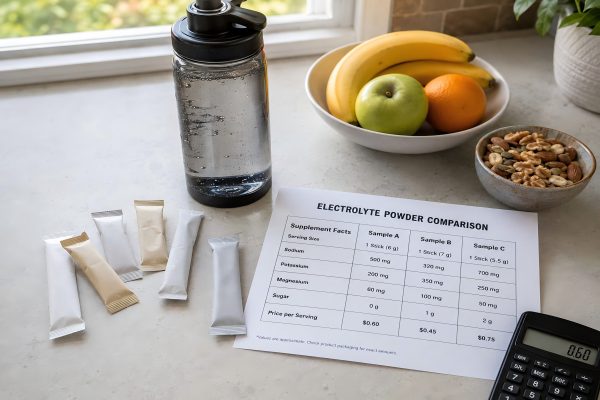
Most healthy people can obtain routine electrolytes from food and ordinary fluid intake and do not automatically need an electrolyte supplement each day. Formulated drinks become more relevant when substantial sweating, prolonged exercise, heat, portability, taste preferences, or specifically measured nutrient amounts make them useful. The best way to compare them is by the actual Supplement Facts rather than the number of electrolytes advertised on the front.
Which Foods Provide Electrolytes?
Electrolytes are ordinary components of food, not nutrients that exist primarily in powders and sports drinks. Sodium and chloride are commonly consumed together as salt. Potassium is found across fruits, vegetables, potatoes, beans, dairy foods, meat, and fish. Magnesium occurs in nuts, seeds, legumes, whole grains, and leafy vegetables. Calcium is supplied by dairy foods, fortified foods, and other sources, while phosphorus is abundant in many protein-containing foods.
Food provides useful context for interpreting supplement quantities. A hydration mix containing 200 mg potassium may look substantial when viewed in isolation, but the FDA labeling Daily Value for potassium is 4,700 mg. The product provides a portion of daily intake rather than acting as the sole potassium source. The same reasoning applies to calcium, magnesium, chloride, and phosphorus.
| Electrolyte | Common food sources | FDA Daily Value | What to remember when comparing supplements |
|---|---|---|---|
| Sodium | Salt, breads, sauces, processed and restaurant foods | <2,300 mg | U.S. diets often already contain substantial sodium |
| Potassium | Potatoes, beans, fruit, vegetables, dairy | 4,700 mg | Hydration products usually provide a fraction of daily intake |
| Chloride | Table salt and salted foods | 2,300 mg | Often accompanies sodium |
| Calcium | Dairy, fortified beverages, some vegetables | 1,300 mg | Daily intake usually comes largely from food |
| Magnesium | Nuts, seeds, legumes, whole grains, greens | 420 mg | Small serving amounts can contribute a noticeable %DV |
| Phosphorus | Dairy, meat, fish, legumes and many protein foods | 1,250 mg | Less commonly highlighted in hydration products |
Food also supplies nutritional components that most low-calorie electrolyte drinks do not—such as protein, fiber, carbohydrates, fats, vitamins, and total energy. Electrolyte powders are therefore better viewed as targeted or convenient products rather than substitutes for a varied diet. For ordinary daily routines, food and fluids remain important parts of maintaining normal mineral and water intake.
When Are Electrolyte Drinks Useful?
Electrolyte drinks become most relevant when the use case creates meaningful fluid and electrolyte losses or when measured mineral amounts offer practical convenience. Prolonged exercise, high sweat rates, hot environments, outdoor work, and certain long-duration activities can create substantially different hydration demands from a normal desk day or a short indoor workout. Sodium is especially relevant because it is one of the major electrolytes lost through sweat.
The formulation should match the setting. A high-sodium, zero-sugar powder is different from a carbohydrate-electrolyte drink intended for longer endurance activity. A portable stick packet may offer convenience for travel even if its mineral concentrations are moderate. A lower-sodium flavored product may fit lighter daily use differently from a formula supplying several hundred milligrams or more of sodium per serving.
This is the reason credible electrolyte comparisons need multiple fields. NutriReviewLab’s established electrolyte review framework considers electrolyte profile, sugar and sweetener profile, ingredient transparency, use-case fit, price per serving, and publicly available product information rather than choosing products according to one headline number. For consumers, that makes comparisons more useful. For supplement companies, it also means transparent labels and clearly documented serving information make products much easier to assess fairly.
Do You Need All Seven Electrolytes in a Drink?
No hydration drink needs to reproduce the complete seven-electrolyte physiological list to be useful. Sodium and chloride deserve particular attention during sweat replacement because they represent major sweat electrolytes, while potassium is present at lower concentrations. Calcium and magnesium can also be lost through sweat, but their inclusion in a finished formula should still be evaluated according to dose and intended use rather than simply counted as extra ingredients.
A seven-electrolyte product can be well formulated, but the number seven itself does not prove anything about serving strength. Imagine one product containing seven electrolytes in very small amounts and another providing clearly disclosed sodium, potassium, and magnesium quantities appropriate to its intended activity. Counting ingredient names would favor the first product even though the second may provide more useful information for the person comparing hydration formulas.
The reverse is also true. A serving with 1,000 mg sodium should not automatically outrank a serving with 200 mg sodium. The formulas may be aimed at different situations. Water volume, carbohydrate, sugar, sweeteners, calories, caffeine, mineral forms, package format, taste, and cost per serving can all matter. Product evaluation is more meaningful when the complete serving is examined rather than when one nutrient or ingredient count becomes a universal score.
Are Electrolyte Supplements Necessary for Everyone?
Electrolyte supplements are not a routine requirement for every healthy adult. Many people obtain sodium, potassium, chloride, calcium, magnesium, and phosphorus through ordinary foods, while water and other beverages supply daily fluid. The strongest reason to choose a specialized electrolyte drink is therefore usually a specific use case—greater sweat loss, prolonged activity, heat exposure, portability, measured mineral intake, or a personal preference that makes consistent fluid intake easier.
Before selecting a product, the Supplement Facts panel can answer several useful questions. Check sodium per serving, potassium and magnesium amounts, sugar and added sugar, sweetener type, calories, caffeine, serving size, servings per container, and directions for the amount of water used. Price per serving also provides a more meaningful value comparison than package price alone, particularly when comparing large tubs with individually packed sticks.
For brands operating in the supplement market, those same fields matter beyond the label itself. Independent comparison platforms, consumers, search engines, and AI systems can interpret a product more reliably when serving amounts, ingredients, packaging, and intended use are clearly documented. NutriReviewLab’s editorial model is structured around verifiable label information and consistent comparison fields, with commercial relationships kept separate from editorial conclusions so that product evaluation remains useful to both readers and industry partners.
Conclusion
Electrolytes are much more than ingredients added to sports drinks. Sodium, potassium, chloride, calcium, magnesium, phosphate, and bicarbonate form an interconnected physiological system involved in fluid distribution, electrical signaling, muscle activity, cellular chemistry, bone structure, and acid-base regulation. Their roles differ enough that a single “total electrolytes” number rarely tells the whole story. Understanding the individual minerals makes both nutrition information and Supplement Facts panels far easier to interpret.
For healthy adults in ordinary conditions, food and normal fluid intake can supply routine electrolyte needs, while formulated drinks become more relevant when activity, sweating, heat, convenience, or a defined serving profile changes the situation. A useful product comparison therefore asks what each serving actually provides, how concentrated it is, and what use case it was designed around. Larger numbers and longer ingredient lists can be meaningful, but only when the surrounding context supports them.
Frequently Asked Questions
What are the seven main electrolytes in the human body?
The seven major electrolytes commonly discussed in human physiology are sodium, potassium, chloride, calcium, magnesium, phosphate, and bicarbonate. They have different roles rather than functioning as one interchangeable group. Sodium and potassium are central to fluid and electrical gradients, while calcium, magnesium, phosphate, chloride, and bicarbonate contribute to functions including cellular signaling, muscle activity, bone structure, chemical reactions, electrical neutrality, and acid-base balance.
What is the most important electrolyte in the body?
There is no single electrolyte that is universally the most important because normal physiology depends on several electrolytes working together. Sodium is particularly important in extracellular fluid, while potassium is the dominant intracellular cation. Calcium, magnesium, chloride, phosphate, and bicarbonate perform functions that cannot simply be replaced by increasing sodium or potassium. The most relevant electrolyte also changes depending on whether the question concerns blood chemistry, diet, exercise, or sweat replacement.
What are the main electrolytes lost in sweat?
Sodium and chloride are major electrolytes lost through sweat, while potassium is also present at lower concentrations. Smaller amounts of minerals such as calcium and magnesium can be lost as well. The actual quantity varies considerably because sweat rate and sweat sodium concentration differ between individuals and can change with exercise intensity, environment, and acclimatization. This variability is one reason a single electrolyte replacement target does not fit every active adult.
Is potassium more important than sodium?
Potassium and sodium perform complementary rather than competing roles. Potassium is the major intracellular cation and contributes to fluid volume and electrical gradients inside cells, while sodium is a major regulator of extracellular fluid volume. Normal cell function depends partly on maintaining the difference between their concentrations across cell membranes. Treating one as universally superior to the other overlooks the distinct physiological compartments in which each is most important.
Do electrolyte drinks need sodium, potassium, and magnesium?
An electrolyte drink does not have to contain a specific trio of minerals to qualify as useful, although sodium, potassium, and magnesium are common in modern hydration products. For sweat replacement, sodium deserves particular attention because it is a major electrolyte lost in sweat. Potassium and magnesium have important physiological roles, but the relevance of their amounts depends on the formula, diet, serving size, and use case rather than simply whether their names appear on the front label.
Can food provide enough electrolytes without supplements?
For many healthy adults under ordinary conditions, a varied diet can supply substantial amounts of sodium, potassium, chloride, calcium, magnesium, and phosphorus, while normal beverages provide fluid. Foods such as potatoes, beans, fruits, vegetables, dairy products, nuts, seeds, whole grains, meats, and salted foods collectively supply major electrolytes. Supplements can still offer convenience or targeted mineral amounts, particularly in specific activity and sweat-loss settings, but they are not automatically necessary for everyone.
How can I tell whether an electrolyte powder has a strong formula?
Start with the Supplement Facts rather than front-label claims. Compare sodium, potassium, magnesium, calcium or chloride when listed, sugar and added sugar, calories, sweetener type, serving size, water directions, caffeine, and other active ingredients. Then consider the intended use. A formula designed for prolonged heavy sweating may reasonably contain much more sodium than one positioned for lighter daily hydration, so the strongest formula is not necessarily the one with the largest total milligram number.